Self-Healing Materials: The Future of Unbreakable Technology


Imagine a world where your cracked phone screen repairs itself overnight, or a bridge with dangerous micro-cracks heals before disaster strikes. This may sound like science fiction, but self-healing materials are bringing us closer to this reality. These advanced substances are designed to automatically repair damage, restoring their original properties without human intervention. They promise to revolutionize industries from consumer electronics to aerospace, making our future more resilient, sustainable, and efficient.
What Are Self-Healing Materials?
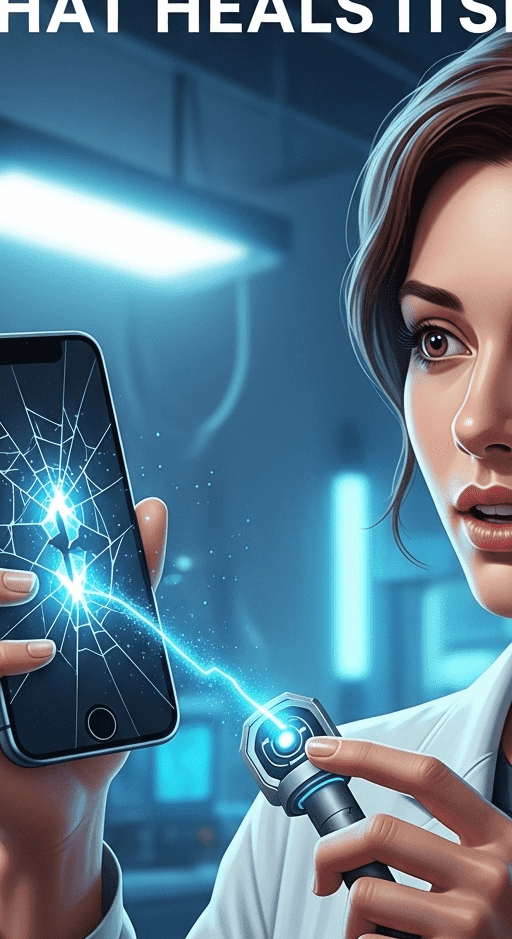
Self-healing materials are a class of substances that can repair cracks, fractures, or defects autonomously. They mimic biological systems — just as human skin closes a wound, these materials can close micro-damages and regain their structural integrity.
The science behind them often relies on:
- Polymers with reversible chemical bonds that reform when heated or stimulated.
- Microcapsules filled with healing agents that break open when a crack appears.
- Bacteria or nanoparticles that trigger chemical reactions to seal concrete cracks.
Applications in Different Fields
1. Smartphones and Consumer Electronics
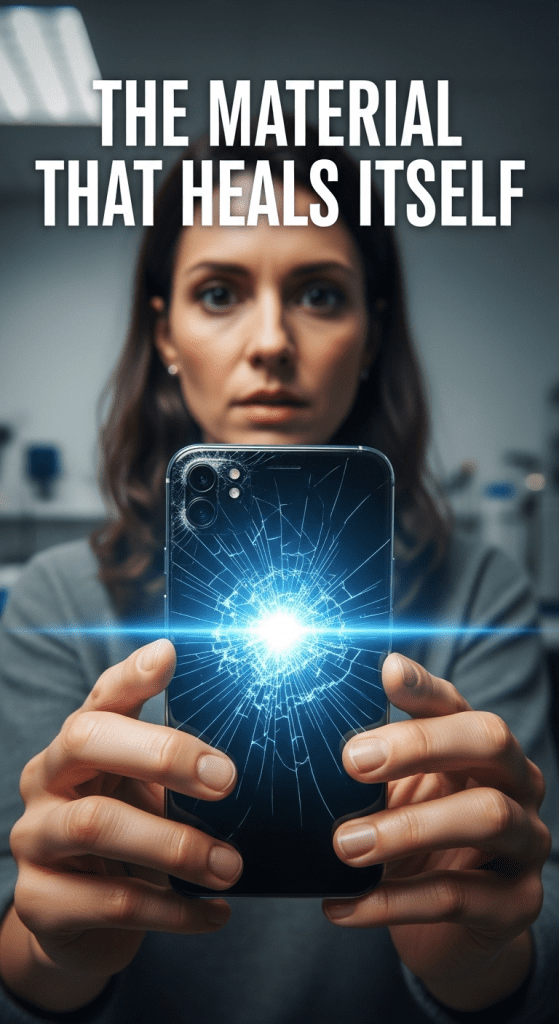
- Companies like Motorola and Apple have filed patents for self-healing phone screens.
- These technologies use shape-memory polymers that react to heat, allowing a cracked screen to “close” itself.
- The potential benefits include longer device lifespans, reduced e-waste, and lower repair costs.
2. Civil Engineering and Infrastructure
- Self-healing concrete uses embedded bacteria or chemical agents to repair cracks.
- When water enters a fracture, bacteria produce calcium carbonate, sealing the gap.
- This approach could significantly extend the life of bridges, tunnels, and buildings, preventing catastrophic failures.
3. Aerospace and Automotive
- Planes and cars face constant stress and micro-damage. Self-healing composites could improve safety and reduce maintenance.
- Researchers are developing lightweight polymers that heal under UV light or heat, perfect for extreme environments.
4. Soft Robotics and Wearables
- Electronic skin (e-skin) made from self-healing polymers can recover from cuts while retaining conductivity.
- This is crucial for prosthetics, medical devices, and soft robots, which need both flexibility and durability.
Advantages of Self-Healing Materials
- Extended Lifespan – Products and structures last longer.
- Reduced Costs – Less money spent on repairs and replacements.
- Sustainability – Lower waste generation and resource consumption.
- Safety – Critical infrastructure like bridges can heal small cracks before they grow into dangerous problems.
Challenges and Limitations
- Cost of production: Current self-healing materials are expensive to manufacture at scale.
- Speed of healing: Some materials take hours or days to fully repair.
- Durability: Healing effectiveness may decrease after repeated damage.
- Scalability: Transitioning from lab experiments to real-world applications remains a hurdle.
The Future of Self-Healing Materials
Experts predict that within the next decade, self-healing technology will become mainstream in:
- Electronics (self-repairing smartphones, foldable devices).
- Smart cities (infrastructure that maintains itself).
- Healthcare (prosthetics and medical implants with self-repair abilities).
- Space exploration (materials that can withstand radiation and self-repair in extreme conditions).
As research advances, costs will decrease, and the speed and efficiency of healing will improve. Ultimately, self-healing materials could redefine how we design and interact with technology, leading to a future where “broken” becomes a thing of the past.
Conclusion
Self-healing materials represent one of the most promising frontiers in material science. From phones that never crack to bridges that never collapse, they could change the way we live, work, and build our world. While challenges remain, the ongoing progress shows that this is more than just a futuristic dream — it’s a real technological revolution in the making.


You Might Also Like;